Partner Links

Showing posts with label Relationships. Show all posts

Friday, January 21, 2022

"As young women, we were taught to keep silent. We were taught early that taking second place is easier than first."

"You tell yourself that’s all right, but it’s not all right. It is important that we learn to express ourselves, to say what it is that we like, that we want."

Said Françoise Gilot, quoted in "Françoise Gilot: ‘It Girl’ at 100 The painter, writer and the only woman with the spunk and self-determination to leave Picasso has a few things to say about success, personal style and the nature of intimacy" (NYT).

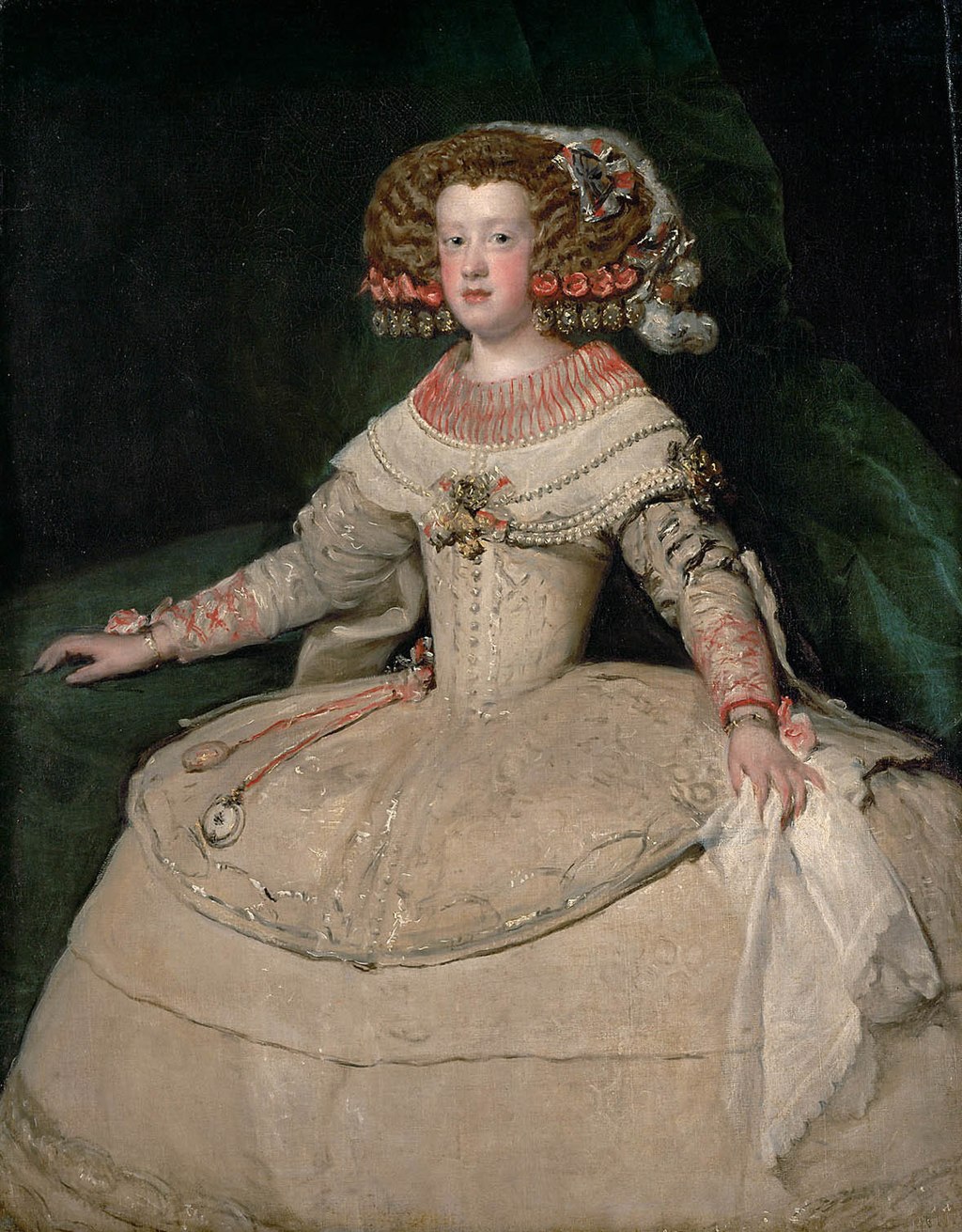
She has not always been above using her looks to further her aims. Soon after they met, she writes, she took up Picasso’s invitation to teach her engraving. “I arrived on time wearing a black velvet dress with a high white lace collar, my dark red hair done up in a coiffure I had taken from a painting of the Infanta by Velázquez.”

When he remarked that her turnout was ill-suited for engraving, she informed him that she knew he had no intention of teaching that day. “I was simply trying to look beautiful,” she told him.

"She has not always been above using her looks to further her aims" — Is that sarcastic understatement?

Speaking of herself now, at the age of 100, she says: “Maybe I rather like the way I look... A sense of style is important... It’s like a pane of glass that makes you seem transparent but at the same time is a barrier.... You should not make yourself known that much to other people and keep your most intimate thoughts to yourself... People tell you to be natural. But what is natural, I would like to know?"

I read her book "Life with Picasso" half a century ago. Highly recommended.

How are you picturing that Infanta hairdo? This seems rather implausible:

Monday, January 17, 2022

"It may seem sweet that your new mate wants to spend all of their time with you. But more often, it’s a red flag..."

"The person may be a narcissist trying to isolate you from the other connections in your life as a way of exerting control....  [I]n cases of love bombing, attention flows in a single direction: One person tries to become the other’s whole world. Dr. Raghavan said that people who have been love bombed often feel as though they’ve lost their sense of self, which can take a long time to rebuild. 'You lose the sense of who you are because little things are being managed for you and these little things can be anything from how you dress to how you present yourself... But it can also be the kind of jokes you’re allowed to tell in public or the kind of woman that he wants you to be.'"


The illustration is a whole bunch of hearts, so it's safe to say the season of Valentine's Day articles is upon us. Like Thanksgiving — with its articles about the difficulties of sitting through a dinner with your family — Valentine's Day articles these days are probably going to be negative. You think that's love? Think again. You think you want love? No, you don't.

Saturday, May 23, 2020

Saturday Snippet: Marriage proposals, noble and ignoble


Back in 1984, English author Rosalind Miles published a book titled "Modest Proposals:  or, May I Call You Mine?"


It's a light-hearted look at marriage proposals, real and fictional, down the ages.  My mother bought it when it came out, and had a good laugh over it:  and, when I was next at home, I did the same.  When I immigrated to America, I brought it with me as part of my library, so my copy is particularly well-traveled - from England, where it was printed and published, to South Africa, to the USA.

Here are a few excerpts.

The ideal proposal is a magical moment, a peak of ecstasy amid a whirl of impressions of beauty - ballgowns and roses, passion and palm trees, with the strains of heavenly music wafting in the distance.  But many people's experience falls far short of this ideal - they get the strains without the music.

Alida Baxter, for instance, found that her marriage proposal could hardly have occurred at a less propitious time and place.  As she ruefully confesses in her autobiography, "Flat On My Back":
I wouldn't be married at all if it weren't for that stomach upset I had in 1969.  I was run down, and being proposed to through the lavatory door caught me off guard.

Yes, well, it would, wouldn't it?  In fairness the Baxter swain had been doing sterling work nursing his inamorata through a combination of Montezuma's Revenge and the Black Death, on what was supposed to be a jolly holiday in Spain.  When language broke down with the Mediterranean medico, he even carried devotion to the extreme of miming her complaint for the doctor's better understanding - which was, in fact, diarrhea!

Now a man who'll mime diarrhea for you in front of a grinning foreigner is clearly a man of many parts, but a sense of timing was not among them.  He waited until his true love was philosophizing from the depths of the bathroom about the division of the Spanish nation into sadists and masochists - 'the sadists manufacture the toilet paper, and the masochists use it' - and chose this tender moment to pop the question.  As she says herself:
There can't be all that many people who've received a proposal of marriage through a lavatory door and I sometimes consider ringing up the Guinness Book of Records, but perhaps an ex-nurse friend of mine has the edge on me.  Her husband proposed to her after she'd given him an enema.

. . .

Of all prospective fathers-in-law, the most sorely tried must have been the father of Olivia Langdon, the best beloved of Samuel Clemens ('Mark Twain').  Clemens was a great admirer of women and by common consent at his best in their company:  'he loved the minds of women, their wit, their agile cleverness, their sensitive perception, their humorous appreciation, the saucy things they would say, and their pretty defiances', recalled one of his friends.  But he fell in love deeply only once, with the beautiful Olivia, as he confessed to his clergyman's wife:
I am in love beyond all telling with the dearest and best girl in the world.  I don't suppose she will marry me.  I can't think it possible.  She ought not to.  But if she doesn't I shall still be sure that the best thing I ever did was to fall in love with her, and be proud to have it known that I tried to win her.

There were tremendous obstacles in the way.  Although now so admired as a leading American writer and humorist, Clemens had had a rough life working and tramping in the Mississippi region, and traces of it survived in his manner ever after.  He was casual and irreverent;  he didn't give a fig for parlor protocol, and would make himself a terror to maiden ladies by putting his feet up on their tables and draping his loose-jointed legs over their chairs.  He was also an incorrigible prankster, and nothing was safe from his sense of the ridiculous.  More seriously, he had no position and poor prospects.  Stern Mr. Langdon was not about to entrust his daisy-flower to such an unpromising reprobate.

But Clemens was a smart man.  As soon as his feelings for Olivia were noticed on a visit, he was asked to leave.  But someone had removed the bolts from the back seat of the family station wagon - so when the horse moved off, the passenger was tumbled out of the back.  His resulting 'concussion' meant that he had to be carried back into the house, and nursed back to health - by Olivia!

Olivia herself was soon won.  But her father was unconvinced.  Finally he proposed that Clemens should provide some character references to establish his suitability as a husband.  Clemens wrote at once to half a dozen worthy citizens who had been on good terms with him earlier in his life.

Naturally any friend of Clemens would share his roistering sense of humor.  All his references obliged with outrageous replies stressing his rambunctious history and claiming that he would make about the worst husband since Blackbeard.  Clemens was summoned to the Langdon house to hear the verdict passed on him by his 'supporters'.  In his own words:
I couldn't think of anything to say.  Mr. Langdon was apparently in the same condition.  Finally he raised his handsome head, fixed his clear and candid eye upon me, and said, "What kind of people are these?  Haven't you a friend in the world?"

I said, "Apparently not."

Then he said, "I'll be your friend myself.  Take the girl.  I know you better than they do."

And so the day was won.

. . .

A proposal is a paradox - just as it can be the liberation of a woman, it can also be the clanging of the trap door for a man.  The state matrimonial has not always had a good press.  Marriage is an institution, said Oscar Wilde, and who wants to live in an institution?  His view received some support from Ogden Nash in a wry poem called "I Do, I Will, I Have":


How wise I am to have instructed the butler
to instruct the first footman to instruct the second
footman to instruct the doorman to order my carriage;
I am about to volunteer a definition of marriage.
Just as I know that there are two Hagens, Walter and Copen,
I know that marriage is a legal and religious alliance entered
into by a man who can't sleep with the window shut and a
woman who can't sleep with the window open.
Moreover, just as I am unsure of the difference between
flora and fauna and flotsam and jetsam,
I am quite sure that marriage is the alliance of two people
one of whom never remembers birthdays and the other
never forgetsam,
And he refuses to believe there is a leak in the water pipe or
the gas pipe and she is convinced she is about to asphyxiate
or drown,
And she says Quick get up and get my hairbrushes off the
windowsill, it's raining in, and he replies Oh they're all right,

it's only raining straight down.
That is why marriage is so much more interesting than divorce,
Because it's the only known example of the happy meeting of
the immovable object and the irresistible force.
So I hope husbands and wives will continue to debate and
combat over everything debatable and combatable,
Because I believe a little incompatibility is the spice of life,
particularly if he has income and she is pattable.

. . .

A very human story of a man's ambivalence, hesitating on the threshold of this great moment and undecided whether to go forward or back, is Jack Benny's courtship.  His girl loved him and had given him every sign of her feelings.  When he told her that he was leaving town, she blurted out, "If you were a gentleman, you'd ask me to go along with you!"

The effect that this simple line produced was devastating.  The great comedian, who had this effect on so many other people, himself literally fell on the floor and rolled about, laughing his head off.  Naturally somewhat miffed, our heroine lost no time in getting herself engaged to another man.  But as soon as her engagement was made public, she says:
... the phone rang.  It was Jack. "I hear you're getting married."

"Yes, I am," I replied.

"Well... the last month or so, I've been thinking about you... And if ever I WANTED to get married, I'd like to marry you... but I DON'T want to get married..."

"Well, that's fine for YOU," I said sarcastically, "but I'M getting married."

"Look," Jack went on, "... I really do think you're much too young to get married... But if you ARE going to get married, why don't you marry me?"

Without missing a beat, I said, "Fine."

"Well then," Jack said, "let's get married this Friday - BEFORE I CHANGE MY MIND!"

There are plenty more stories in the book, many of them highly amusing.  It's long out of print, but used copies are freely available.

Peter

Monday, May 11, 2020

Locking down our relationships (NOT!)


Cartoonist and satirist Scott Adams has this take on relationships and isolation during the coronavirus lockdown.  Click the image to be taken to a larger version at the Dilbert comic strip's Web site.


Fortunately, Miss D. and I have each other, so our cats have been safe!


Peter

Tuesday, April 14, 2020

Does marriage have value anymore, monetary or otherwise?


Aaron Clarey, a.k.a. Captain Capitalism, offers an intriguing look at whether dowries are something that may become part of the modern "marriage market" in the Western world, just as they were in the not too distant past (and still are in some other parts of the world).  I don't necessarily agree with his arguments, but I have to admit that he poses questions that require an answer.

If you don't know (or never knew) what a dowry was, it was a payment the father usually made to his would-be son in law to take his daughter off his hands and care for her into the future.  This was based on the premise that women did not work, would likely bear children, would stay home to rear said children, and would in a purely accounting sense be a financial liability to the family, earning no income.  And so, the would-be husband would be entitled, if not required, to some kind of financial recompense to take the financial liability of a woman off the hands of her father.

Fast forward 300 years later and I ask a very simple question;

How is it any different today?

If there was a time young women were not a financial liability, but an asset, it was the boomers and Gen X'ers.  These women were workers, they were employed, and they did take care of themselves.  But today's generation of young women (who are also at the age of marriage) do not present young male suitors a similar financial proposition or condition.  Matter of fact, most young women today are horrifically bad financial liabilities, and any young man who commits to them risks tanking his own finances.

This isn't primarily due to young women not working.  They most certainly do, and at labor force participation rates higher than any generation of women past.  But the financial liability nature of most young women today is due to student loans and the education scam that destroys their finances.  Young women ... are lured too easily to go $120,000 in debt for worthless liberal arts degrees that offer them no employability.  Worse, the indoctrination they receive in college weaponizes them against men, instead of making them partners and lovers in life to help one another.  And with the repeated indoctrination that women should NEVER rely on a man, the end result is not only often a girl who is a financial risk, but is a girl no man wants.  Indebted, talentless, unemployable, and ideologically programmed to be against men, marriage, family, and love. Even women trained in STEM, who are eminently employable, are often times indoctrinated to be antagonistic towards men, increasing the risk of divorce, adding a huge legal risk to a financial one as well.

Traditionally, logically, and "accountingly," such a proposition would require some kind of financial compensation for the legal and financial risks of committing to a modern day western woman.  And today, young men (or any man) is well within his rights to demand such a modern-day dowry.  But since most boomer and Gen X fathers have no money (and are likely financially compromised through matrimony as well), demanding a dowry today is moot.

. . .

Most men simply cannot afford to take on that risk, and even with a dowry the non-financial risks are just as costly and daunting as the financial ones.  Yes at the same time, men are biologically programmed, nay, compelled to want to get married and have kids. And so what is likely going to happen is what's been happening for quite some time now - men are balking.  They're going to punt.

The increase in cohabitation and the abandonment of marriage is a sign of men waking up and eschewing the legal and financial risks marriage presents to them ... And such marriage-avoidant behavior will continue as the internet educates men about the unacceptable legal and financial risks marriage presents to them (or, frankly, they just saw their dad get butchered in divorce court).

And so what we've seen this past 20 years, certainly the past 10 will continue. With no "theoretical dowries" and marriage being such a bad deal, more and more men will simply leave the marriage market because they can't afford it.

There's more at the link.

Modern marriage is weighted heavily against a man in our legal system.  I'm aware of one situation going down right now, where a divorced father, with legal custody of his children, has seen his former wife simply take them and refuse to return them.  She's gone so far as to interfere with his bank accounts, file false charges against him, and try to wreck his life, out of spite and vindictiveness.  I repeat - she has no legal right to custody of the children, but because she doesn't want him to have them, she's more than prepared to use them as a weapon against him (including lying to them that he doesn't want them any more), and destroy his reputation in the process.  What's more, law enforcement authorities appear powerless.  They've told him to get yet another court order for them to enforce, ignoring those he already has.  I don't understand that.

When men see that sort of thing happening, and realize that our legal system is predisposed to believe the mother rather than the father, is it any wonder that many men are afraid to commit themselves to a relationship that may have those consequences?

There's also the very real problem that a hyper-sexualized society, where a "hookup culture" has taken root, is anything but the ideal climate in which to foster traditional marriage.  When both partners in a marriage come into that relationship with a past history of dozens, if not scores of lovers, and probably having lived with several of those partners, how can they pretend that there's anything unique about their relationship?  There isn't.  They're just going through the motions they've been through many times before.  There's nothing "special" to bind them together, because they've done it all before.  When it comes to arguments, they can put each other down with comments like, "Oh, so-and-so was much better at that than you are!"  There's no foundation of "special" intimacy on which to build, because intimacy is no longer special.  It's been trivialized.

Perhaps, if a dowry was required prior to marriage, both sides of the equation would realize that it signifies the value of their relationship in monetary terms.  Perhaps they might then attach more intrinsic value to marriage, instead of seeing it as an arrangement that may, or may not, endure, depending on one or the other party's whims.  To me, of course, there's also a deeply spiritual element to marriage;  but that's not shared by many people, so I won't emphasize it here.  I'll simply note that I think it's essential.

Aaron Clarey poses some very good questions, that force us to confront unpleasant realities, and which deserve answers.

Peter